
Polycystic ovary syndrome (PCOS)
What is PCOS, why this happens, what is the root cause, what are its effects, what are its sign and how it will be cured?????
These are the common questions which come to our mind whenever we come across such medical conditions.
What is PCOS and its sign:
This PCOS is basically a HORMONAL DISORDER among women of REPRODUCTIVE AGE. Doctors don’t know exactly what causes PCOS. They believe that high levels of male hormones prevent the ovaries from producing hormones and making eggs normally.
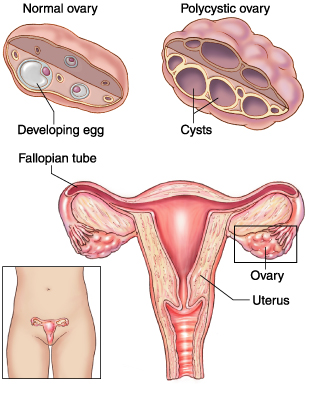
Also it is considered as a condition in which women suffer with irregular periods that means their ovaries do not regularly release eggs. Apart from this, It affects a woman’s ovaries, the reproductive organs that produce estrogen and progesterone-hormones that regulate the menstrual cycle. PCOS increases the level of androgens in female body. Androgen is high levels of “male hormones” in one’s body, which causes excess facial or body hair.
In Polycystic ovaries, the ovaries become enlarged and contain many fluid-filled sacs (follicles) that surround the eggs.
If one is having any two from the above said conditions then possibility is there that the person can be diagnosed with PCOS. Many women have PCOS but don’t know it.
Symptoms of PCOS:
PCOS appears to be a spectrum of disorders, with some women having only mild symptoms whilst others are affected more severely.
Symptoms may include:
- Irregular, infrequent periods or no periods at all
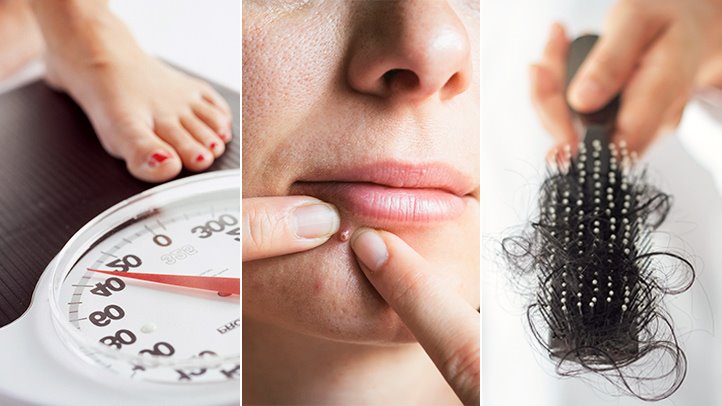
- Weight gain and difficulty losing weight
- Acne
- Reduced fertility.
- Hirsutism – unwanted facial and body hair
- Loss of hair on the head
Risk to pregnant women:
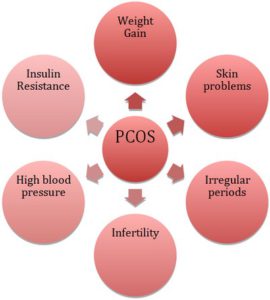
Women with PCOS are more likely to be obese and to rely on reproductive technology to get pregnant. Women with PCOS have an increased risk of developing several medical complications throughout life, including:
- Insulin resistance
- Type 2 diabetes
- High cholesterol
- High blood pressure
- Heart disease
- Stroke
- Sleep apnea
- An Increased risk of Endometrial cancer
For pregnant women, PCOS brings an increased risk of complications. This includes preeclampsia, a dangerous condition for both mother and baby-to-be. If you develop preeclampsia during your pregnancy, you will have to be monitored very closely. Other concerns include pregnancy-induced hypertension (high blood pressure) and gestational diabetes.
Cure:
It is basically not possible to treat all of the symptoms of PCOS at once.
The treatment options available for PCOS are effective at managing a woman’s symptoms, but symptoms don’t immediately go away. For this, a change in lifestyle is also required, such as eating healthy and exercising regularly, which can promote weight loss and reduce other symptoms. Certain medicines also work in regulating hormone levels and controls PCOS.
Some effective ways to control PCOS are as given below:
- Birth control pills, which can control menstrual cycles, reduce androgen production and help clear acne.
- Fertility medications, which can stimulate ovulation in PCOS patients who wish to become pregnant.
- Eat healthy food like green vegetables, fruits and lentils.
- Avoid junk food
- Routine exercise
- Anti-obesity drugs
- Anti-androgens
- Diabetes medications
- No mental stress
 AllAboutYou
Leave a comment